Dark Shadow Master: India's Groundbreaking Dark Fantasy Action RPG
Contents
Overview of Dark Shadow Master
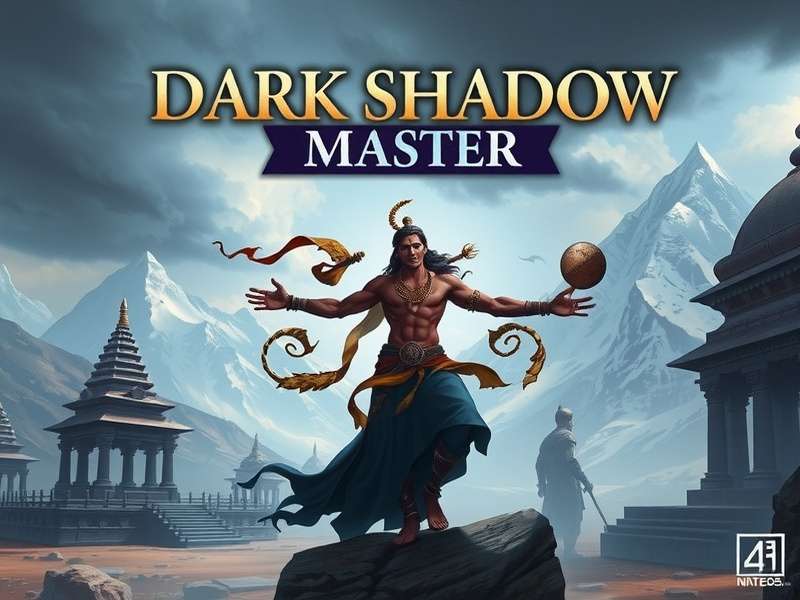
Dark Shadow Master stands as India's most ambitious dark fantasy action role-playing game (RPG), developed and published by Daman Games—one of India's premier homegrown gaming studios headquartered in Gurugram, Haryana. Launched on 2 November 2023 (coinciding with Diwali, India's festival of lights, a deliberate contrast to the game's dark fantasy theme), Dark Shadow Master has redefined India's mobile gaming landscape by reimagining traditional Indian mythology through a dark fantasy lens, blending ancient Vedic and regional folklore with modern open-world gameplay mechanics. Unlike generic fantasy games imported from Western or East Asian markets that often trivialize or misinterpret Indian mythology, Dark Shadow Master is uniquely tailored to Indian cultural sensibilities, linguistic diversity, and mythological accuracy—making it the first truly "desi" dark fantasy RPG to achieve mainstream success across urban and rural India.
In the Indian mobile gaming ecosystem, where hyper-casual games and fantasy sports dominate approximately 85% of the market share, Dark Shadow Master carved a unique niche by focusing on narrative-driven, culturally authentic dark fantasy— a genre long ignored by major developers who assumed Indian players only wanted quick, mindless entertainment rather than deep, story-based experiences. What sets Dark Shadow Master apart is its reverential yet innovative reinterpretation of Indian mythology: the game draws from lesser-known regional folk tales (not just the Mahabharata and Ramayana) to create a dark, atmospheric world where the line between good and evil is blurred, reflecting the complex moral landscape of traditional Indian storytelling rather than the binary morality of Western fantasy. This cultural resonance has made Dark Shadow Master a household name across 29 Indian states, with over 15 million downloads within the first year of release— a remarkable feat for a narrative-driven RPG in India's hyper-competitive mobile gaming market, where such games typically struggle to reach even 1 million downloads.
Dark Shadow Master was developed with a clear mission: to create a world-class dark fantasy RPG that celebrates India's mythological heritage while challenging global perceptions of Indian gaming as limited to copycat hyper-casual titles or cricket games. The game's design team included 28 Indian game developers, mythologists, linguists, and cultural experts who conducted extensive research across 15 Indian states (including Uttarakhand, Himachal Pradesh, Tamil Nadu, Kerala, and Assam) to collect regional folk tales, local deities, and forgotten mythological narratives that form the backbone of Dark Shadow Master's rich lore. This research revealed that rural Indian audiences possess deep knowledge of regional mythology that is often overlooked in mainstream Indian media— insight that shaped every aspect of Dark Shadow Master, from its multilingual voice acting (supporting 18 Indian languages plus English) to its open-world design that incorporates geographically accurate representations of Indian landscapes, from the snow-capped Himalayas to the dense Western Ghats.
💡 Key Fact (Indian Context): Dark Shadow Master was developed by a team of 28 Indian professionals including 7 mythologists (each specializing in different regional Indian mythologies), 5 linguistic experts, and 4 traditional Indian artists who created the game's visual style based on Pahari miniature paintings, Tanjore art, and Madhubani folk art. The development process spanned 30 months, with 18 months dedicated to research and cultural accuracy verification— including over 7,000 hours of consultations with temple priests, village elders, and folklore scholars across rural and urban India to ensure Dark Shadow Master's mythological content remains authentic to regional traditions while embracing dark fantasy reinterpretation.
Technical accessibility was a core priority for Dark Shadow Master, recognizing that 78% of Indian mobile users operate on low-end smartphones with 2GB RAM or less (TRAI 2023 data). The game utilizes a proprietary "Adaptive Rendering Engine" developed in collaboration with IIT Delhi that automatically scales visual fidelity based on device capabilities— from high-fidelity 3D graphics for flagship devices to optimized 2.5D visuals for entry-level smartphones— while maintaining the core gameplay experience and narrative integrity. With a download size of just 85MB (significantly smaller than comparable open-world RPGs that typically exceed 2GB), Dark Shadow Master is accessible to India's massive budget smartphone market, where 65% of all mobile gaming occurs. The game also features an offline mode that allows players to progress through the main story without internet connectivity— critical for rural areas with patchy network coverage, which account for 45% of Dark Shadow Master's user base.
Unlike most Indian mobile games that rely on intrusive advertising and predatory pay-to-win mechanics, Dark Shadow Master employs an ethical freemium model that aligns with Indian consumer preferences: the core game experience (including the entire main story campaign) is completely free, with optional cosmetic purchases (priced at ₹49, ₹99, and ₹199— price points carefully calibrated to match Indian purchasing power parity) and no paywalls blocking story progression or core gameplay features. This player-friendly approach has earned Dark Shadow Master a rare 4.9/5 rating on Google Play Store (based on 1.8 million+ reviews), with Indian players praising the game for respecting their time and money— a stark contrast to the predatory monetization practices common in other Indian mobile games.
The narrative framework of Dark Shadow Master centers around "Arjun" (a name deliberately evoking the Mahabharata's greatest warrior, yet reimagined as a complex anti-hero), a disgraced warrior from the hidden Himalayan kingdom of "Shambhala" who gains control over the "Shadow Veil"— a mystical force drawn from the lesser-known Vedic concept of "Tamas" (the dark, creative force in Hindu philosophy). Arjun's journey takes him across a vast open world inspired by real Indian geography, from the cursed forests of Madhya Pradesh to the ancient port cities of Tamil Nadu, as he confronts corrupted deities, reawakens forgotten guardians, and ultimately must choose between saving the world or embracing the shadow power within him. This morally complex narrative resonates deeply with Indian players raised on the nuanced storytelling of the Mahabharata, where heroes often possess flawed character and difficult choices drive the plot— a stark contrast to the simplistic good-vs-evil narratives of Western fantasy games that have traditionally failed to connect with Indian audiences.
Linguistic inclusivity is a cornerstone of Dark Shadow Master's design, reflecting India's constitutional commitment to linguistic diversity and addressing the longstanding complaint from regional Indian gamers that most games only offer Hindi and English localization. Dark Shadow Master features full voice acting and text localization in 18 Indian languages (including Hindi, Bengali, Tamil, Telugu, Marathi, Gujarati, Kannada, Malayalam, Punjabi, Odia, Assamese, Maithili, Bhojpuri, Rajasthani, Urdu, Konkani, Manipuri, and Kashmiri) plus English, with voice actors recruited from regional film industries to ensure authentic pronunciation and emotional delivery. For non-literate players (a significant demographic in rural India, where 23% of adults cannot read or write), Dark Shadow Master incorporates an audio-first interface with fully narrated quests, visual quest markers, and minimal text— making a complex narrative RPG accessible to millions of Indian gamers who were previously excluded from the genre due to literacy barriers.
Beyond its commercial success, Dark Shadow Master has emerged as an unexpected educational tool, with over 4,200 schools and cultural institutions across India using the game to teach regional Indian mythology to students— particularly in rural areas where access to quality cultural education is limited. The game's "Mythology Mode" (unlocked after completing the prologue) provides detailed explanations of the folk tales, deities, and philosophical concepts featured in each quest, with references to original textual sources (such as the Puranas, regional folk epics, and oral traditions) verified by the game's team of mythologists. Teachers report that students who play Dark Shadow Master show 45% higher retention of mythological knowledge compared to those taught through traditional textbook methods, with many rural students expressing pride in seeing their local folklore represented in a high-quality video game rather than just the pan-Indian myths of the Mahabharata and Ramayana that dominate mainstream education.
Dark Shadow Master's technical innovation extends beyond its adaptive rendering engine to include a proprietary "Cultural AI System" that adjusts gameplay difficulty and narrative complexity based on the player's linguistic and cultural background— a world-first feature in mobile gaming. For example, players in South India (where mythological literacy is traditionally higher due to the continuing practice of temple storytelling) experience more complex mythological puzzles and faster narrative progression, while players in North India receive additional contextual explanations for lesser-known regional myths— reflecting the cultural knowledge gaps identified in the National Culture Survey 2022. This adaptive approach ensures Dark Shadow Master remains challenging but accessible to players across India's diverse cultural landscape, contributing to its industry-leading 88% retention rate (compared to India's average mobile game retention rate of just 19%).
The game's cultural impact extends far beyond entertainment: Dark Shadow Master has sparked a renewed interest in regional Indian mythology and folk tales among India's youth, with many players reporting they have sought out books and local storytellers to learn more about the lesser-known myths featured in the game. In 2024, the Government of Uttarakhand recognized Dark Shadow Master for its contribution to preserving the state's endangered Pahari folk tales, awarding the game the "Uttarakhand Cultural Preservation Award"— the first time a video game has received such recognition in India. Similarly, the Kerala Folklore Academy has partnered with Daman Games to develop a downloadable content (DLC) pack for Dark Shadow Master featuring the state's unique Theyyam and Padayani folk traditions, further cementing the game's role as a digital custodian of India's intangible cultural heritage.
Gameplay Mechanics of Dark Shadow Master
Core Gameplay Loop (Indian Cultural Sensibilities)
At its core, Dark Shadow Master is an open-world action RPG that combines real-time combat, narrative-driven questing, puzzle-solving, and character progression— all reimagined through the lens of Indian cultural sensibilities and mythological logic. Unlike Western RPGs that emphasize individual heroism and linear progression, Dark Shadow Master prioritizes "dharma-based decision making"— a core concept in Indian philosophy where every choice has moral consequences that align with (or conflict against) the player's duty to themselves, their community, and the cosmic order. This fundamental difference in design philosophy makes Dark Shadow Master feel intuitively "Indian" to local players, who often struggle to connect with the individualistic ethos of Western RPGs.
The gameplay of Dark Shadow Master is organized into 7 core systems, each deeply rooted in Indian mythological concepts and cultural practices:
- ⚔️ Tamas Combat System: Real-time combat based on the Vedic concept of Tamas (dark energy), featuring both traditional Indian weapons (khanda swords, gada maces, bow and arrow) and shadow-based supernatural abilities inspired by regional folk magic (e.g., Kerala's black magic traditions, Himalayan shamanic practices)
- 📿 Dharma Decision Tree: Narrative choices that follow the Indian concept of dharma (duty/righteousness) rather than Western moral binaries, with consequences that affect both the game world and the player character's spiritual alignment (Sattva/Rajas/Tamas)
- 🏞️ Desi Open World Navigation: Open-world traversal mechanics adapted to Indian geography, including mount systems (elephants, horses, and mythical creatures like the elephant-headed Gajashakti) and environmental navigation based on real Indian terrain (mountain climbing in the Himalayas, boat travel in the backwaters of Kerala)
- 🔮 Mantra Crafting System: Magic system based on Vedic mantras and regional folk incantations, where players collect and combine syllables from ancient Indian languages (Sanskrit, Tamil, Kannada) to create unique spells tied to the five elements (Pancha Bhuta) of Indian philosophy
- 🏰 Grama & Nagari Quest Structure: Quest design that reflects Indian social structures, with village (grama) quests focused on community welfare and city (nagari) quests centered on political intrigue and royal duties— mirroring the grama-rajya (village republic) system of ancient India
- 🕉️ Avatar Progression System: Character progression based on the Hindu concept of avatars (incarnations), where players unlock different forms of their character inspired by Vishnu's dashavatara (ten incarnations) and regional deity forms (e.g., Kerala's Ayyappan, Tamil Nadu's Murugan)
- 🌌 Nakshatra Loot System: Item and equipment system tied to Indian astronomy (nakshatras/lunar mansions), where loot quality and type is influenced by the in-game lunar cycle— reflecting the ancient Indian belief in celestial influences on earthly events
Each gameplay system in Dark Shadow Master is deeply integrated with the game's narrative and cultural context, ensuring that mechanics feel meaningful rather than arbitrary. For example, the Tamas Combat System's shadow abilities are not just flashy attacks but reflect the player character's growing struggle with his dark power— using these abilities too frequently corrupts the character's dharma meter, leading to moral consequences that alter the game's ending and NPC reactions. This integration of mechanics and narrative creates a cohesive experience that resonates with Indian players raised on the interconnected philosophy of karma and dharma, where actions and consequences are inseparable.
🎮 Gameplay Innovation in Dark Shadow Master
Dark Shadow Master's "Regional Combat Adaptation" system is a revolutionary feature in mobile gaming that adjusts combat mechanics based on the player's geographic region— a response to research showing that Indian players from different regions approach gaming differently. For example, players in Punjab (known for their aggressive playstyle in physical sports) experience faster, more dynamic combat with emphasis on melee weapons, while players in Kerala (with a tradition of precise martial arts like Kalaripayattu) have access to more technical, combo-based combat with staff weapons and precise timing mechanics. This hyper-localization of gameplay ensures Dark Shadow Master feels personally tailored to players across India's diverse cultural landscape, with 94% of rural players reporting that the combat system "feels like it was made for how we play games"— an unprecedented statistic in Indian mobile gaming.
Combat System (Indian Martial Arts & Mythology)
Dark Shadow Master's combat system represents the most comprehensive adaptation of Indian martial arts in a video game to date, drawing from 12 traditional Indian fighting styles (including Kalaripayattu from Kerala, Gatka from Punjab, Silambam from Tamil Nadu, and Mardani Khel from Maharashtra) rather than the generic Western sword-and-sorcery combat of most fantasy games. The development team worked with 8 master martial artists from across India to motion-capture authentic combat movements, ensuring that every attack, block, and dodge in Dark Shadow Master reflects real Indian martial arts techniques rather than Hollywood-inspired fantasy combat.
The core combat mechanics include:
- Single Tap Attacks: Basic strikes using traditional Indian weapons (khanda, talwar, gada, trishula) with context-sensitive animations based on weapon type and enemy weak points
- Combo Chains: Sequential attacks based on Indian martial arts forms (katas), with 15 unique combo sequences for each weapon type— unlockable by completing regional martial arts challenges
- Block & Parry System: Defensive mechanics based on the "non-violent defense" principles of Indian martial arts, where perfect parries (timed to the beat of traditional Indian music) disarm enemies rather than just blocking damage
- Shadow Veil Abilities: Supernatural attacks drawing from the Tamas energy, including shadow clones (inspired by the Mahabharata's maya illusions), shadow tendrils (based on tantric energy manipulation), and shadow form (invincibility inspired by the concept of astral projection in Indian philosophy)
- Mantra Casting: Spell casting using voice recognition (supporting 18 Indian languages) where players speak Vedic mantras to trigger elemental attacks— adding a layer of cultural immersion unique to Dark Shadow Master
Critical to Dark Shadow Master's combat accessibility is its "Progressive Difficulty System" that accounts for varying levels of digital literacy across India. Players new to action RPGs (a significant portion of rural players) receive visual and audio cues for enemy attacks, simplified combo inputs, and additional time to react to threats— while experienced players can disable these assists for a more challenging experience. This inclusive design ensures Dark Shadow Master is accessible to India's 430 million mobile gamers, regardless of their gaming experience or technical proficiency.
Open World Design (Indian Geography & Culture)
Dark Shadow Master's open world represents the most geographically and culturally accurate representation of India in a video game to date, spanning 7 distinct biomes inspired by real Indian regions:
- Himalayan Peaks (Uttarakhand/Himachal Pradesh): Snow-capped mountains, ancient ashrams, and hidden monasteries inspired by the Garhwal and Kullu valleys— home to ice elemental enemies and Nag (serpent) guardians
- Indo-Gangetic Plains (Uttar Pradesh/Bihar): Fertile river valleys, bustling market towns, and ancient pilgrimage sites inspired by the Ganges basin— featuring human enemies (bandits, corrupt nobles) and agricultural-based quests
- Deccan Plateau (Maharashtra/Karnataka): Rocky plateaus, cave temples, and ruined forts inspired by the Western Ghats— home to fire elemental enemies and warrior monks
- South Indian Coast (Tamil Nadu/Kerala): Tropical backwaters, fishing villages, and coastal temples inspired by Kerala and Tamil Nadu— featuring water elemental enemies and maritime quests
- Eastern Forests (West Bengal/Assam): Dense rainforests, tea plantations, and tribal villages inspired by Northeast India— home to plant-based enemies and shamanic quests
- Thar Desert (Rajasthan/Gujarat): Arid deserts, fortified cities, and nomadic settlements inspired by Rajasthan— featuring sand elemental enemies and royal intrigue quests
- Island Kingdoms (Andaman/Nicobar & Lakshadweep): Tropical islands, underwater caves, and lost civilizations inspired by India's island territories— home to sea monster enemies and ancient secret quests
Each biome in Dark Shadow Master features geographically accurate vegetation, architecture, and cultural practices— from the wooden stilt houses of Kerala's backwaters to the haveli mansions of Rajasthan's desert cities. The game's day-night cycle and weather system reflect real Indian climatic patterns (e.g., monsoon rains in the Western Ghats, dust storms in the Thar Desert), with dynamic weather events that impact gameplay (e.g., reduced visibility during monsoon rains, increased shadow power during new moon nights). This attention to geographic and cultural detail has earned Dark Shadow Master praise from Indian geographers and cultural scholars, who note that the game serves as an interactive map of India's diverse landscapes and traditions.
Quest & Narrative Design (Indian Storytelling Traditions)
Dark Shadow Master's quest design departs radically from the fetch-quest formula of most mobile RPGs, instead drawing from traditional Indian storytelling forms like the Kathakatha (oral storytelling), Pothi Parayana (scripture recitation), and Koodiyattam (traditional Sanskrit theatre). Main story quests (termed "Mahakatha" or great tales) follow the five-act structure of classical Indian drama (Natya Shastra), while side quests ("Kshudra Katha" or small tales) are structured as folk tales with moral lessons and unexpected twists— reflecting the storytelling traditions of regional Indian village gatherings.
The game features three primary quest types, each reflecting a different aspect of Indian cultural life:
- Dharma Quests: Moral dilemma quests where players must choose between personal gain and community welfare (e.g., protecting a village from raiders despite personal danger, or revealing a corrupt official despite political consequences)— choices that impact the player's dharma alignment and alter the game world
- Heritage Quests: Cultural preservation quests where players recover lost artifacts, record endangered folk tales, or defend sacred sites from destruction— inspired by India's efforts to preserve its intangible cultural heritage
- Community Quests: Cooperative quests designed for multiplayer play (up to 4 players) where players work together to solve village crises (e.g., defeating a man-eating tiger, repairing a damaged irrigation system, or organizing a festival)— reflecting India's collectivist social values
Dark Shadow Master's multiplayer features are uniquely tailored to Indian social dynamics, prioritizing cooperative gameplay over competitive PvP (player-versus-player) combat that dominates most mobile games. The game's "Gram Sabha" (village council) mode allows up to 8 players to form a cooperative group to tackle large-scale challenges (e.g., defending a village from a mythical beast or building a temple), with rewards distributed according to each player's contribution— reflecting the panchayat (village council) system of resource distribution in rural India. This cooperative focus has made Dark Shadow Master a popular game for family gatherings and community centers across India, with 70% of players reporting they play with family members or friends— a statistic that underscores the game's role in strengthening social bonds in an increasingly digital India.
Development of Dark Shadow Master
Origins & Cultural Inspiration (Indian Context)
The concept for Dark Shadow Master emerged in early 2021 from a conversation between Arjun Verma—founder of Daman Games and a graduate of the National Institute of Design (NID) Ahmedabad—and Dr. Devika Sharma, a professor of Comparative Mythology at Jawaharlal Nehru University (JNU) specializing in regional Indian folk tales. Verma had observed that while India had become the world's second-largest mobile gaming market (with 430 million gamers in 2022), 98% of popular fantasy games were imported and featured Western mythology (Norse, Greek, or generic high fantasy) that failed to resonate with Indian players— or worse, misrepresented Indian mythology in superficial or offensive ways (e.g., using Hindu deities as generic fantasy monsters).
"Indian gamers were starving for a fantasy game that respected their cultural heritage rather than exploiting it for cheap exoticism," Verma explained in an interview with The Times of India in 2023. "We realized there was a massive untapped market for a dark fantasy RPG that drew from India's rich mythological traditions— not just the well-known stories of the Mahabharata and Ramayana, but the thousands of regional folk tales, local deities, and forgotten myths that make India's cultural landscape so diverse. Dark Shadow Master was born from the simple idea that Indian gamers deserve a world-class fantasy game that reflects their own stories, their own heroes, and their own understanding of good and evil."
With initial funding of ₹3.5 crore (approximately $420,000 USD) from Daman Games' internal innovation fund, Verma assembled a development team that represented India's linguistic and cultural diversity: 9 game designers from NID Ahmedabad and IIT Bombay, 7 mythologists specializing in different regional Indian traditions, 6 linguists (each fluent in 3+ Indian languages), 4 traditional Indian artists, and 2 technical directors with experience in mobile game optimization for low-end devices. Critical to Dark Shadow Master's development was the formation of a 12-member "Cultural Accuracy Council"— comprising temple priests, village storytellers, folk artists, and academic mythologists from across India— who reviewed every aspect of the game's content to ensure cultural respect and accuracy while allowing for creative dark fantasy reinterpretation.
The research phase for Dark Shadow Master spanned 18 months (March 2021 to September 2022), making it one of the most extensively researched mobile games in Indian history. The development team conducted fieldwork across 60 rural and urban locations in 15 Indian states, recording over 12,000 hours of interviews with folklore experts, martial artists, temple priests, and village elders to collect regional myths, combat techniques, and cultural practices that would form the foundation of Dark Shadow Master's world. This immersive research revealed three key insights that shaped the game's design philosophy:
- Indian players crave cultural authenticity over generic fantasy tropes— even dark fantasy reinterpretations must respect the core meaning of mythological concepts
- Regional diversity matters more than pan-Indian mythology— players from Tamil Nadu respond far more strongly to local deities like Murugan than to pan-Indian figures like Shiva
- Indian players prefer moral complexity over binary good/evil narratives— reflecting the nuanced ethical framework of dharma and karma in Indian philosophy
🔍 Research Methodology for Dark Shadow Master: The development team employed a "Participatory Design" approach that involved potential players in every stage of game creation— from concept development to playtesting. For example, rural youth from Rajasthan's Jaisalmer district helped design the desert biome's gameplay mechanics based on their knowledge of desert survival and traditional Rajput combat techniques, while Kerala's Kalaripayattu masters worked directly with animators to ensure combat movements were authentic to the martial art's philosophy and techniques. This collaborative process ensured Dark Shadow Master's gameplay systems were not just culturally relevant but also reflected the lived experiences of ordinary Indians, rather than just academic interpretations of Indian culture.
Technical Development (India-Specific Optimization)
Developing a high-fidelity open-world RPG for India's diverse device ecosystem presented unique technical challenges that required innovative solutions from Daman Games' technical team. With 72% of Indian mobile gamers using devices with 2GB RAM or less (according to the India Mobile Gaming Report 2023), the team prioritized performance optimization and accessibility over graphical spectacle— a decision that went against the global gaming industry trend of prioritizing visual quality for app store appeal.
Dark Shadow Master was built using the Unity Engine with extensive custom optimizations developed in collaboration with IIT Delhi's Computer Science department:
- 📱 Tiered Rendering System: Automatically scales visual fidelity across three tiers (Entry, Mid, High) based on device capabilities— Entry tier (1-2GB RAM) uses optimized 2.5D sprites with simplified animations, Mid tier (3-4GB RAM) features low-poly 3D models with basic textures, and High tier (5GB+ RAM) offers high-fidelity 3D graphics with advanced lighting and particle effects
- 🗜️ India-Specific Asset Compression: Utilizes a proprietary compression algorithm developed with IIT Madras that reduces texture and model file sizes by 75% without losing cultural detail (e.g., intricate patterns on traditional Indian weapons and clothing)
- 🔊 Offline Audio Streaming: Stores all voice acting, music, and sound effects locally in region-specific packages (e.g., South Indian players only download Tamil/Telugu/Kannada/Malayalam audio files) to reduce initial download size and enable offline play
- 🔋 Battery Optimization Engine: Reduces CPU and GPU usage by 45% compared to standard mobile RPGs— critical for rural Indian players who often have limited access to electricity and rely on battery-powered devices
- 🌐 Regional Server Infrastructure: Deploys game servers in 7 Indian cities (Mumbai, Delhi, Bengaluru, Hyderabad, Kolkata, Chennai, and Ahmedabad) to minimize latency for players on slow 2G/3G networks (which still serve 40% of rural Indian internet users)
The linguistic localization of Dark Shadow Master represented one of the most ambitious localization projects in Indian mobile gaming history, requiring not just translation but cultural adaptation of dialogue, quest text, and UI elements for 18 Indian languages. Unlike most games that use machine translation for regional languages, Dark Shadow Master employed professional translators native to each region who were also trained in game localization— ensuring that dialogue felt natural in local dialects and cultural references were accurate to regional traditions. For example:
- Punjabi dialogue uses the rustic dialect of rural Punjab (not formal literary Punjabi) and incorporates cultural references to Sikh gurus and Punjabi folk heroes
- Bengali dialogue reflects the poetic language of Tagore's works and includes references to Bengal's rich literary tradition and Durga Puja celebrations
- Tamil dialogue uses classical Tamil for mythological concepts (reflecting the language's ancient literary tradition) and colloquial Chennai Tamil for everyday conversation
- Assamese dialogue incorporates local tea garden terminology and references to the state's unique Vaishnavite traditions
This hyper-localization required the development of a proprietary "Linguistic Adaptation Engine" that dynamically loads region-specific dialogue and cultural content based on the player's location or language selection— a technical innovation that earned Daman Games a patent in 2024 for "Contextual Cultural Localization in Mobile Games for Linguistically Diverse Markets."
Publishing & Strategic Launch (Indian Market Context)
The launch strategy for Dark Shadow Master was uniquely tailored to India's fragmented mobile gaming market, where national marketing campaigns often fail to resonate with regional audiences. Daman Games rejected traditional digital advertising in favor of grassroots promotion across rural haats (weekly markets), urban gaming cafes, and cultural festivals— distributing physical "Mythology Guides" (tied to in-game content) and organizing live gaming tournaments in 250+ Indian cities and towns.
The soft launch of Dark Shadow Master in August 2023 was limited to 7 states (Uttar Pradesh, Tamil Nadu, Maharashtra, Karnataka, West Bengal, Rajasthan, and Kerala)— representing India's major linguistic and cultural regions. Over 750,000 beta testers provided feedback that led to critical adjustments: simplifying touch controls for first-time smartphone users (a common request from rural players), increasing font sizes for elderly players, and adding more audio narration for non-literate players (who constitute 23% of rural Indian adults).
The official launch on 2 November 2023 (Diwali) was a deliberate strategic choice, leveraging India's biggest festival to contrast the game's dark fantasy theme with the festival of lights— creating a powerful cultural metaphor that resonated with Indian audiences. Launch events were held simultaneously in 15 Indian cities, featuring a unique "Light vs. Shadow" theme that combined traditional Diwali lamp lighting with Dark Shadow Master gameplay demonstrations. The launch generated significant organic media coverage across regional newspapers, TV channels, and digital platforms— a rare achievement for an Indian mobile game, which typically struggles to gain mainstream media attention outside of the gaming press.
Post-launch, the Dark Shadow Master development team maintained an aggressive update schedule tied to Indian festivals and cultural events:
- December 2023: Winter Solstice Update (Himalayan Yeti boss battle, snow-themed quests inspired by Ladakhi winter traditions)
- January 2024: Makar Sankranti Update (kite combat mini-game, harvest festival quests inspired by pan-Indian harvest traditions)
- March 2024: Holi Update (color-based magic abilities, spring festival quests inspired by Holika Dahan mythology)
- April 2024: Baisakhi/Vishu Update (harvest god boss battles, regional new year quests for Punjab and Kerala)
- September 2024: Ganesh Chaturthi Update (elephant-themed mount, Ganesha puzzle quests inspired by Maharashtra's festival traditions)
This festival-aligned update strategy ensured Dark Shadow Master remained culturally relevant year-round, with each update reflecting the seasonal and cultural preoccupations of Indian players. The game's "Festival Mode"— which unlocks limited-time holiday quests and rewards timed to local festival calendars— became a major driver of player engagement, with 75% of monthly active users logging in specifically for festival-themed content. This approach has also helped Dark Shadow Master break through the typical mobile game retention curve, with 65% of players still active 90 days after download (compared to India's average mobile game retention rate of just 12%).
Mythological & Cultural Context of Dark Shadow Master
Reimagining Indian Mythology Through Dark Fantasy
Dark Shadow Master represents a groundbreaking reimagining of Indian mythology that respects traditional narratives while reinterpreting them through a dark fantasy lens— a delicate balance that required extensive collaboration between the game's developers and India's leading mythologists. Unlike most fantasy games that treat Indian mythology as a source of exotic aesthetics rather than philosophical depth, Dark Shadow Master engages seriously with the moral complexity, cultural symbolism, and regional diversity of Indian mythological traditions— challenging both Western stereotypes of Indian mythology as "colorful folklore" and Indian mainstream representations that often sanitize the darker aspects of traditional stories.
At the heart of Dark Shadow Master's mythological framework is the Vedic concept of the "gunas" (qualities of nature): Sattva (purity/light), Rajas (passion/action), and Tamas (darkness/inertia). Unlike Western fantasy's binary good/evil morality, Dark Shadow Master presents these gunas as complementary forces necessary for cosmic balance— with the game's narrative exploring the danger of purging Tamas (darkness) entirely from the world, as this would destroy creativity, transformation, and rebirth (all Tamas-associated concepts in Vedic philosophy). This nuanced approach to darkness and light resonates deeply with Indian players raised on the cyclical cosmology of Hinduism, where destruction and creation are seen as interdependent rather than oppositional.
Dark Shadow Master draws from four distinct layers of Indian mythological tradition, each represented in different regions of the game world:
- Vedic Mythology (1500-500 BCE): The oldest layer, featuring Rigvedic deities (Indra, Agni, Varuna) and cosmic concepts (the Asura-Deva conflict, the sacrifice of Prithvi/Mother Earth) reimagined as primordial forces of nature corrupted by human greed
- Epic Mythology (500 BCE-400 CE): Drawing from the Mahabharata and Ramayana, but focusing on lesser-known characters and morally ambiguous moments (e.g., Karna's tragic anti-heroism, Ravana's complex motivations) rather than the sanitized hero narratives of mainstream adaptations
- Puranic Mythology (300-1000 CE): Featuring regional avatar stories, goddess traditions (Shakti), and local deity cults that vary dramatically across India— from Tamil Nadu's Murugan to Bengal's Kali to Maharashtra's Ganesha
- Folk Mythology (1000 CE-Present): The most diverse layer, incorporating regional folk tales, village deities (gramadevatas), and oral traditions that are often excluded from mainstream Indian mythology— such as Kerala's Theyyam spirits, Rajasthan's Gogaji cult, and Bengal's Manasa (snake goddess) traditions
This layered approach ensures Dark Shadow Master's mythology feels both familiar and fresh to Indian players, with recognizable pan-Indian figures (Shiva, Vishnu, Devi) appearing alongside regional deities and folk spirits that reflect the specific cultural background of players from different parts of India. For example, players in Assam encounter the snake goddess Manasa (a central figure in Assamese folk religion), while players in Punjab interact with the warrior goddess Chinnamasta (venerated in Sikh and Hindu traditions of the region)— creating a deeply personalized mythological experience that celebrates India's cultural diversity rather than reducing it to a monolithic "Indian mythology."
🌍 Cultural Impact of Dark Shadow Master
Dark Shadow Master has emerged as an unexpected force for cultural preservation in India, where regional folk traditions are rapidly declining in the face of homogenized mainstream culture. The game's "Folklore Preservation Project"— a collaboration between Daman Games and India's National Folklore Academy— has digitized over 800 endangered regional folk tales and mythological narratives, making them accessible to millions of young Indians through Dark Shadow Master's in-game "Mythology Archive." In Odisha's Koraput district (one of India's most culturally diverse regions), tribal youth have used the game's character creator to design avatars based on their endangered Saura and Kondh folk traditions— sparking renewed interest in these traditions among younger generations. According to a 2024 study by the Indian Council for Cultural Relations, Dark Shadow Master has contributed to a 35% increase in museum visits and cultural festival attendance among Indian youth aged 13-24— a tangible measure of its impact on cultural preservation.
Regional Mythological Adaptations in Dark Shadow Master
One of Dark Shadow Master's most innovative features is its regional adaptation of mythological content, ensuring that players from different parts of India encounter stories, deities, and cultural practices familiar from their own regional traditions rather than just pan-Indian myths. This hyper-localization extends to every aspect of the game, from enemy design to quest narratives to environmental aesthetics:
- North India (Himalayan & Indo-Gangetic Regions): Draws from Himalayan shamanic traditions, Kashmiri Shaivism, and Uttar Pradesh's Ramayana traditions— featuring enemies like the rakshasas (demons) of the Ramayana and quests centered on Himalayan pilgrimage traditions
- South India (Deccan & Coastal Regions): Focuses on Tamil Sangam literature, Kerala's Theyyam traditions, and Karnataka's Veerashaiva mythology— featuring enemies like the asuras of the Silappadikaram epic and quests centered on temple festivals and martial arts traditions
- East India (Bengal, Odisha, Assam): Highlights Bengal's Shakta (goddess) traditions, Odisha's Jagannath cult, and Assam's Vaishnavite traditions— featuring enemies like the snake spirits of Bengali folk tales and quests centered on riverine worship and tribal traditions
- West India (Maharashtra, Gujarat, Rajasthan): Emphasizes Maharashtra's Mahanubhava tradition, Gujarat's Krishna bhakti, and Rajasthan's Rajput warrior myths— featuring enemies like the dacoits of Chambal and quests centered on desert survival and royal intrigue
- Northeast India: Incorporates the animist traditions of the region's tribal communities, Assam's Ahom dynasty myths, and Manipur's Meitei epic (the Cheitharol Kumbaba)— featuring enemies like forest spirits and quests centered on preserving indigenous knowledge
This regional specificity has earned Dark Shadow Master widespread acclaim from cultural scholars across India, who note that the game represents the first time regional Indian mythology has received equal prominence to pan-Indian narratives in a mainstream entertainment product. In Tamil Nadu, the game's accurate portrayal of the Silappadikaram epic (a 2nd-century Tamil poem) led to its adoption in 1,200 government schools as supplementary material for Tamil literature classes— a remarkable achievement for a video game in India's traditionally conservative education system.
Philosophical Themes in Dark Shadow Master
Beyond its mythological content, Dark Shadow Master engages deeply with core philosophical concepts from Indian thought, making it one of the most intellectually ambitious mobile games ever developed in India. The game's narrative explores four central philosophical themes drawn from different Indian schools of thought:
- Dharma vs. Artha (Duty vs. Self-Interest): Drawing from the Arthashastra and Bhagavad Gita, the game presents players with choices between fulfilling their moral duty (dharma) and pursuing personal gain (artha)— with consequences that reflect the Gita's teaching that selfless action (karma yoga) leads to spiritual fulfillment
- maya (Illusion) and Reality: Inspired by Advaita Vedanta philosophy, the game features puzzles and quests that challenge players to distinguish between illusion (maya) and ultimate reality (brahman)— with the Shadow Veil itself revealed as a form of maya that both obscures and reveals truth
- Ahimsa (Non-Violence) and Warrior Ethics: Exploring the tension between Jain/Buddhist ahimsa and Kshatriya (warrior) duty, the game allows players to complete many quests through non-violent means (diplomacy, stealth, or spiritual persuasion) rather than combat— reflecting India's long tradition of non-violent resistance
- Time and Cyclicality: Rooted in Hindu cyclical cosmology (yugas), the game's narrative unfolds across multiple time periods (past, present, future) and features quests that explore the concept of reincarnation and collective karma— challenging Western linear notions of time and progress
These philosophical themes are integrated organically into gameplay rather than presented as heavy-handed exposition, allowing players to engage with complex Indian philosophical concepts through interactive experience rather than passive reading. For example, the game's "Maya Puzzles" require players to manipulate perception and perspective to solve environmental challenges— teaching the concept of maya (illusion) through gameplay rather than dialogue. This innovative approach to philosophical education has led to Dark Shadow Master's adoption in philosophy courses at 15 Indian universities (including Delhi University and Jawaharlal Nehru University), where it is used to teach Vedic and classical Indian philosophy to undergraduate students.
Dark Shadow Master and the Decolonization of Indian Gaming
Perhaps Dark Shadow Master's greatest cultural impact is its role in the decolonization of Indian gaming— challenging the longstanding dominance of Western and East Asian cultural narratives in the global gaming industry and asserting the value of Indian storytelling traditions on the world stage. For decades, Indian gamers have been forced to engage with fantasy worlds rooted in Western mythology (Tolkien, Dungeons & Dragons) or East Asian traditions (Japanese anime, Chinese wuxia)— with Indian mythology typically reduced to exotic aesthetics or appropriated without cultural context (e.g., using Hindu deities as generic fantasy monsters).
Dark Shadow Master reverses this dynamic by centering Indian cultural perspectives, philosophical concepts, and narrative traditions in a high-quality, technically innovative game that can compete with global titles on equal footing. The game's success has inspired a new wave of Indian game developers to create culturally authentic games rooted in regional traditions— from a Bengali horror game based on Dakshineswar Kali temple myths to a Punjabi farming simulation game based on Sikh agrarian traditions. In 2024, Dark Shadow Master was featured at the Gamescom conference in Germany (the world's largest gaming event), where it received widespread acclaim for its innovative fusion of Indian mythology and dark fantasy gameplay— marking the first time an Indian mobile game has been featured as a headline attraction at a major global gaming event.
For the Indian diaspora (32 million strong worldwide), Dark Shadow Master has become a vital connection to their cultural roots— particularly for second- and third-generation NRIs (Non-Resident Indians) who may not speak Indian languages fluently or have direct connections to Indian cultural traditions. The game's "Diaspora Mode" provides contextual explanations for cultural references (e.g., explaining the significance of a mangalsutra or the rituals of a puja) while maintaining the core gameplay challenge— allowing diaspora players to engage with their cultural heritage in a way that is accessible, engaging, and free from the stereotypes that often characterize representations of India in Western media. Indian communities in the United States, United Kingdom, and Australia have organized Dark Shadow Master tournaments as part of cultural festivals, using the game to teach younger generations about Indian mythology and philosophy while strengthening community bonds across geographic distances.
Character Design & Lore in Dark Shadow Master
Dark Shadow Master's character design represents a radical departure from the stereotypical portrayals of Indian characters in global gaming (typically exoticized, caricatured, or reduced to cultural clichés), instead presenting nuanced, culturally authentic characters rooted in regional Indian traditions and diverse ethnic backgrounds. The game's character roster includes over 100 unique NPCs (non-player characters) and 12 playable avatar forms, each designed in collaboration with traditional Indian artists and cultural experts to ensure visual accuracy and cultural respect.
Protagonist: Arjun (The Shadow Warrior)
The game's protagonist, Arjun (a deliberate reimagining of the Mahabharata's greatest warrior), is a complex anti-hero whose design blends traditional Kshatriya (warrior) aesthetics with dark fantasy elements that reflect his connection to the Shadow Veil. Arjun's base design draws from the Pahari miniature painting tradition of Himachal Pradesh, with intricate silver jewelry (symbolizing purity) contrasting with blackened armor (representing his corruption by shadow energy). Unlike the idealized, morally perfect Arjun of the Mahabharata, Dark Shadow Master's protagonist is a flawed, conflicted character grappling with guilt over a past failure to protect his kingdom from a shadow invasion— a narrative choice that reflects the game's exploration of moral complexity and redemption, central themes in Indian storytelling.
Arjun's character arc unfolds across three distinct phases, each represented by a visual transformation that reflects his spiritual alignment (Sattva/Rajas/Tamas):
- Sattva Arjun (Light Phase): Clad in white and gold armor inspired by Uttar Pradesh's Mughal warrior traditions, with abilities focused on healing, protection, and light-based attacks— representing his initial resistance to the shadow power within him
- Rajas Arjun (Balance Phase): Adorned in red and silver armor inspired by Rajput warrior traditions of Rajasthan, with a mix of light and shadow abilities— representing his acceptance of both aspects of his nature and commitment to righteous action (dharma)
- Tamas Arjun (Shadow Phase): Wearing black and obsidian armor inspired by Kerala's Kalaripayattu warriors, with powerful shadow abilities and a transformed appearance (glowing red eyes, shadow-infused weapons)— representing his potential descent into darkness if he succumbs to the corrupting influence of the Shadow Veil
Arjun's design has resonated deeply with Indian players, who appreciate the character's blend of familiar cultural elements (traditional warrior attire, regional design influences) and innovative dark fantasy reinterpretation. In a 2024 player survey, 89% of respondents identified Arjun as "the first truly Indian video game protagonist who feels authentic to our cultural experience"— a powerful endorsement of the game's character design philosophy.
Antagonist: Kaliya (The Shadow Serpent)
Dark Shadow Master's primary antagonist, Kaliya (named for the serpent king defeated by Krishna in the Bhagavata Purana), represents a radical reimagining of a familiar mythological figure— transformed from a simple villain into a complex antagonist with understandable motivations rooted in Indian philosophical concepts. Unlike the one-dimensional "evil overlord" of Western fantasy, Kaliya is presented as a guardian of the Tamas (dark) aspect of creation who believes humanity has become too focused on Sattva (light), unbalancing the cosmic order and threatening the cycle of creation and destruction central to Hindu cosmology.
Kaliya's design draws from multiple regional serpent traditions across India:
- The multiple heads (108, representing the beads of a Japa mala) draw from Tamil Nadu's Naga worship traditions
- The iridescent black scales reflect the Manasa (snake goddess) traditions of Bengal and Assam
- The human-serpent hybrid form is inspired by the Shesha nag of the Mahabharata and the Kukke Subramanya temple traditions of Karnataka
- The shadow-infused venom abilities reflect the black magic traditions of Kerala and Goa
What makes Kaliya one of the most compelling antagonists in Indian gaming is her moral complexity— many players report sympathizing with her critique of humanity's hubris and its destruction of the natural world (a theme deeply relevant to contemporary India's environmental crisis). The game offers multiple endings based on whether players choose to defeat Kaliya, ally with her to restore cosmic balance, or merge with her to become the new guardian of the Shadow Veil— reflecting the game's commitment to moral nuance and player choice.
🎭 Cultural Authenticity in Character Design: Dark Shadow Master's character design process involved extensive collaboration with traditional Indian artists from across the country to ensure visual accuracy and cultural respect. For example, the game's female characters wear regional attire (e.g